
Have you ever met someone and felt an instant connection that you couldn’t explain? Or perhaps, on the darker side, have you ever tried to leave a relationship but felt physically and emotionally unable to let go, even years later?
We often talk about chemistry, compatibility, and love. But there is a deeper concept that many people experience without having a name for it. This is often referred to as a “soul tie.”
While modern psychology might call it an emotional attachment or a trauma bond, spiritual circles have recognized this phenomenon for centuries. It is the idea that two souls can become knit together in a way that impacts their minds, emotions, and decisions.
In this comprehensive guide, we will explore exactly what is a soul tie, how these bonds are formed, the clear signs that you might be in one, and how to navigate them for a healthier life.
Quick Note
A soul tie is a deep spiritual or emotional connection between two people. It acts like an invisible cord that links souls together. While some ties are healthy and beneficial, others can be toxic, draining your energy and keeping you stuck in the past.
Defining the Core Concept: What Is a Soul Tie?
To understand this concept, imagine two pieces of fabric glued together. If you try to rip them apart quickly, you don’t just separate the glue; you often tear the fabric itself. This is the perfect analogy for a soul tie.
A soul tie is a phrasal concept often derived from biblical texts (specifically the story of David and Jonathan, where their souls were “knit” together), but the principle applies universally. It represents a spiritual linking of two people.
When you ask what is a soul tie, you are essentially asking about the transfer of energy and emotion between two individuals. It means that what affects one person often affects the other, regardless of the physical distance between them.
Is It Just a Religious Term?
While the terminology is spiritual, the experience is very human and psychological. Neuroscientists tell us that intimate connections reshape our neural pathways. We literally “wire” ourselves to the people we are closest to. Whether you view this through a spiritual lens or a psychological one, the reality of the bond remains the same.
The Two Faces of Connection: Holy vs. Unholy Ties
Not all soul ties are bad. In fact, healthy soul ties are essential for a fulfilling life. The problem arises when a bond becomes “unholy” or toxic. It is crucial to distinguish between a connection that builds you up and one that tears you down.
Here is a detailed comparison to help you identify the difference:
| Feature | Healthy (Godly) Soul Tie | Unhealthy (Toxic) Soul Tie |
|---|---|---|
| Emotional Effect | You feel energized, safe, and at peace. | You feel drained, anxious, and confused. |
| Independence | Encourages you to grow as an individual. | Creates codependency; you feel lost without them. |
| Foundation | Based on trust, respect, and mutual love. | Based on control, manipulation, or lust. |
| Outcome | Both people become better versions of themselves. | One or both people regress or stagnate. |
| Ending the Bond | Can be painful but accepted with maturity. | Feels like dying; creates obsession and stalking behaviors. |
Important Note: A healthy soul tie (like a marriage or a lifelong friendship) serves as a foundation. An unhealthy soul tie serves as a cage.
How Are Soul Ties Formed?
Bonds do not appear out of thin air. They are built through specific actions and intense experiences. Understanding how they form is the first step in managing them.
1. Physical Intimacy
This is the most common way soul ties are discussed. Sexual intimacy is designed to be a bonding experience. When you are physically intimate with someone, you are not just sharing a body; you are sharing a part of your soul. This creates a powerful glue that can be difficult to remove, which explains why “friends with benefits” situations often end in emotional heartbreak.
2. Deep Emotional Vulnerability
You don’t need to touch someone to form a tie. Sharing your deepest secrets, fears, and dreams creates an emotional bridge. If you rely on someone entirely for your emotional stability, a tie forms.
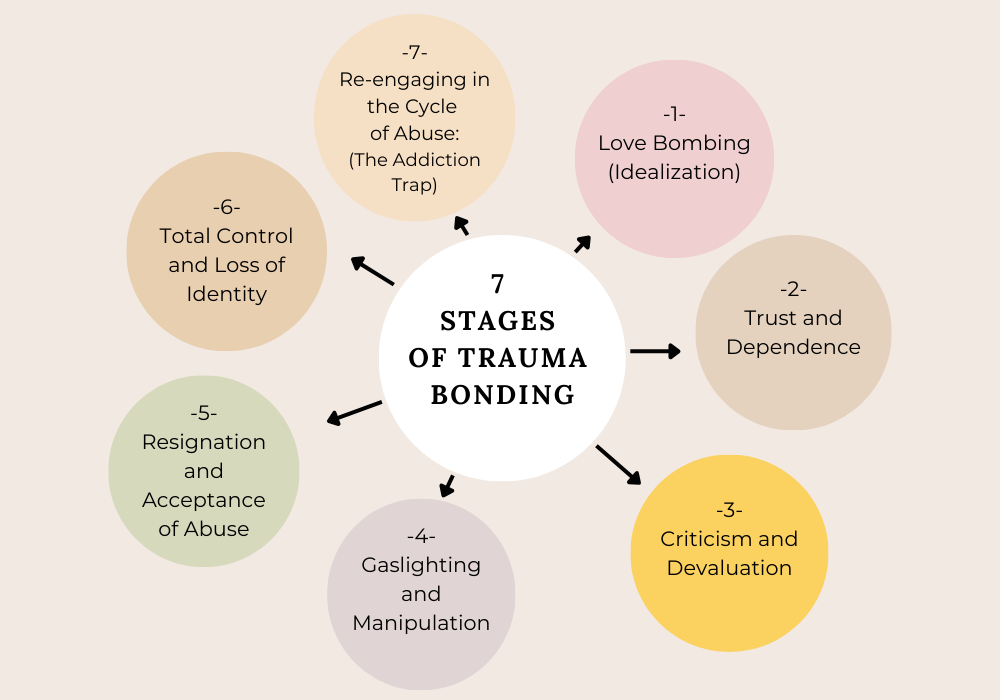
Going through a crisis together creates a massive bond. Soldiers often have soul ties with their platoon members. However, trauma bonding in abusive relationships is a dark version of this, where the victim feels tied to the abuser because they are the only two who “understand” the situation.
Related: 23 Signs of Repressed Childhood Trauma in Adults
Related: 15 Hidden Signs of Emotional Trauma in Adults & How to Heal
4. Vows and Agreements
Words are powerful. Making promises like “I will never love anyone else but you” or “We will be together forever” acts as a verbal contract. These vows can bind your mind to a person long after the relationship has ended.
Related: 12 Signs Of An Unhealthy Relationship
Related: 18 Signs of Manipulation in a Relationship
7 Major Signs You Have an Unhealthy Soul Tie
How do you know if you are stuck in a toxic bond? It can be tricky because these feelings often masquerade as “true love.” However, there are clear symptoms that indicate a spiritual infection rather than a healthy connection.
1. Obsessive Thoughts
You replay conversations in your head constantly. You check their social media profiles ten times a day. Even if you haven’t seen them in years, they dominate your mental space. This is not just missing someone; this is a mental stronghold.
2. Extreme Emotional Reactions
When you hear their name, your stomach drops. You might feel sudden waves of anger, deep sadness, or anxiety without a clear trigger. You feel like you are on an emotional rollercoaster that you didn’t buy a ticket for.
Related: 10 Anger Management Strategies To Help You Stay Calm
Related: Why Do I Feel Like a Failure? 20 Causes That Might Shock You
3. You Cannot “Just Move On”
You try to date new people, but you constantly compare them to your ex. No one measures up. You might even sabotage new, healthy relationships because you are subconsciously waiting for the old person to return.
Related: Why Do We Self Sabotage? 9 Ways to Overcome It
4. Telepathic-like Experiences
Have you ever felt suddenly depressed, only to find out later that the person you are tied to was going through a crisis at that exact moment? Unhealthy soul ties can act like an invisible conduit for emotions, where you carry their burdens without realizing it.
Related: Smiling Depression: The Hidden Pain Behind a Happy Face
Related: Feeling Blue? Here’s What You Can Do to Feel Better
5. Justifying Abuse
This is a dangerous sign. If someone treats you poorly—lies, cheats, or manipulates you—and you find yourself defending them to your friends or blaming yourself, you likely have a soul tie. The bond blinds you to the reality of their character.
6. Vivid Dreaming
Your subconscious mind often reveals what your conscious mind ignores. Constantly dreaming about an ex-partner or a toxic friend is a strong indicator that the connection is still active in your psyche.
7. Taking on Their Habits
You start using their slang, adopting their political views, or picking up their bad habits, even if you don’t like them. You are losing your identity in theirs.
“A soul tie makes you feel like you are incomplete without the other person. A healthy relationship makes you feel supported, but still whole on your own.”
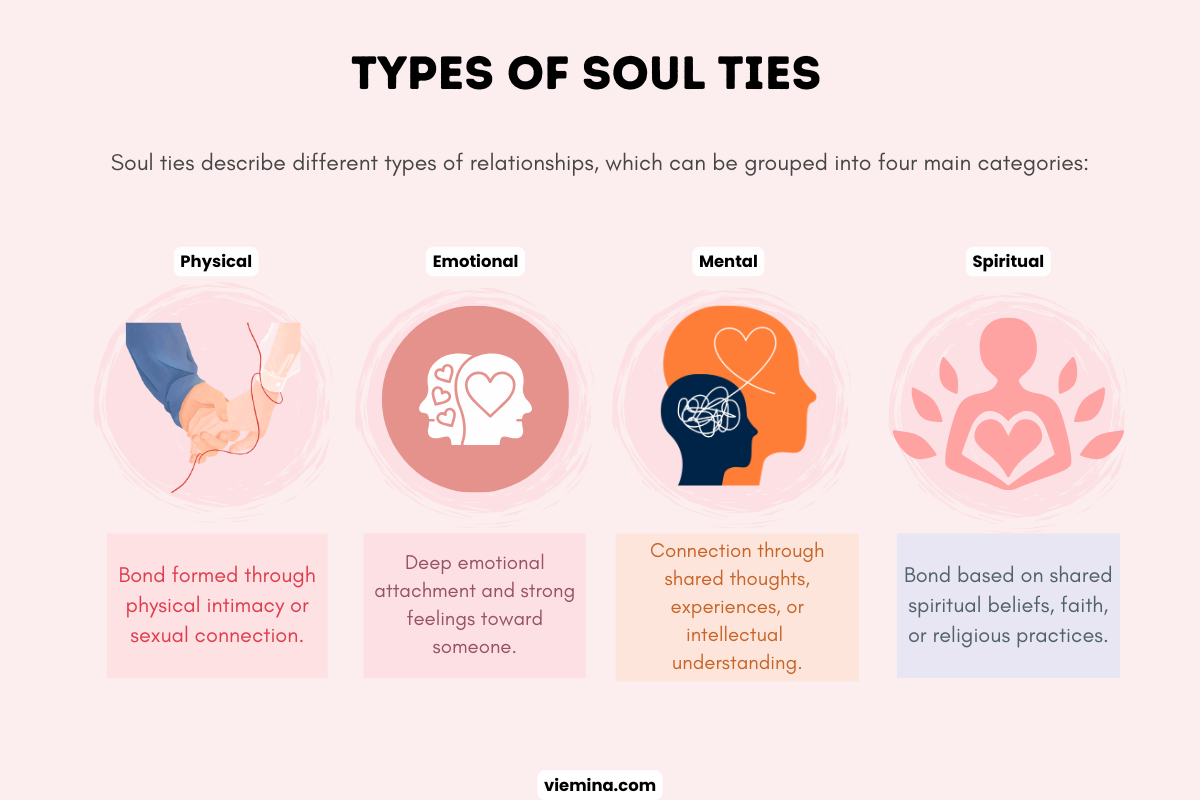
Types of soul ties
No two connections are alike, which is why soul ties are not one-size-fits-all.
So, there are four types of soul ties:
Soul Tie vs. Twin Flame: What’s the Difference?
In the modern spiritual community, terms get mixed up frequently. It is easy to confuse a soul tie with the concept of a “Twin Flame.”
A Twin Flame is described as the other half of your soul—a mirror that challenges you to grow. While the connection is intense, the ultimate goal of a Twin Flame journey is usually described as spiritual awakening.
A Soul Tie, specifically a toxic one, is more about attachment. While a Twin Flame connection (if you believe in it) is about destiny, a soul tie is often about history. It is a bond forged through choices and actions, not necessarily cosmic design.
The Impact of Unresolved Ties on Your Life
Ignoring a negative soul tie is dangerous. It works like a background app on your phone, draining your battery even when you aren’t using it. Here is how it affects your daily life:
1-Mental Fog
You struggle to focus on your career or goals because your mental energy is being funneled elsewhere.
Related: Brain Fog : Symptoms and 10 Causes
2-Stagnation
You feel stuck in life. New doors won’t open because you are still holding onto the handle of the old door.
3-Physical Fatigue
Emotional stress manifests physically. You may experience unexplained headaches, fatigue, or sleep issues.
Step-by-Step Guide: How to Break a Toxic Soul Tie
If you have read this far and realized, “This is me, I am stuck,” do not panic. Soul ties can be broken. It requires intention, action, and time. Here is a realistic roadmap to freedom.
Step 1: Acknowledge the Bond
You cannot fight an enemy you don’t see. Admit to yourself that you have an unhealthy attachment. Stop calling it “love” if it hurts you. Call it what it is: a toxic dependency.
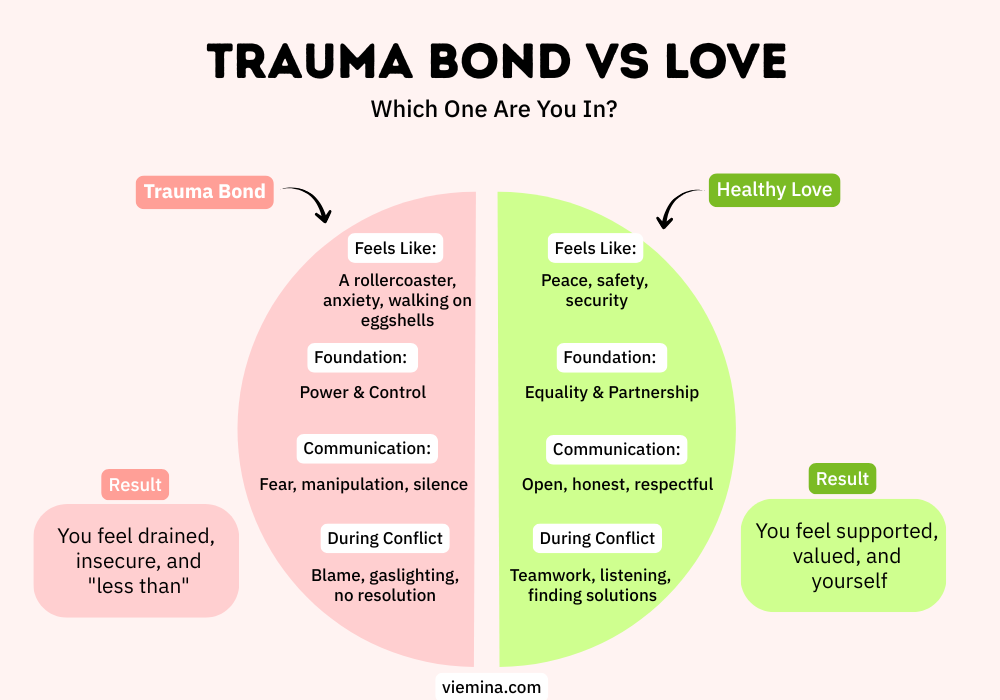
Related: Trauma Bond vs Love: How to Tell the Difference
Step 2: Forgive (The Hardest Step)
Forgiveness is not about saying what they did was okay. It is about releasing your right to revenge. As long as you hate them, you are tied to them. Forgiveness cuts the cord of bitterness.
Tip: You also need to forgive yourself for getting into the relationship in the first place.
Step 3: Remove Physical Reminders
Do you still wear the hoodie they gave you? do you keep their photos on your phone? Physical objects act as anchors. You need to declutter your environment.
- Delete old text messages.
- Throw away or donate gifts that hold emotional weight.
- Unfollow them on social media (or block them if necessary).
Step 4: Renounce Verbal Agreements
If you are spiritual, speak out loud. Say, “I renounce any pledge I made to [Name]. I break the agreement that I belong to them.” Psychologically, hearing yourself say these words empowers your brain to shift perspective.
Step 5: The “No Contact” Rule
You cannot heal a wound if you keep touching it. For a soul tie to wither, it must be starved of attention. This means zero contact. No “checking in,” no “birthday texts.” Give yourself a period of at least 90 days of absolute silence to reset your baseline.
Related: Power of Silence After Break up: 11 Tips for How to Use It
Final Thoughts
Understanding what is a soul tie gives you the power to evaluate your relationships honestly. We are social creatures designed to connect, but we must be wise about who we bond with.
Your soul—your mind, will, and emotions—is your most valuable asset. Guard it carefully. If you find yourself bound to a person who drains your life force, take the brave steps today to cut that tie. Freedom is waiting on the other side.
Related: 7 Stages of Trauma Bonding: How to Break the Cycle & Heal
Frequently Asked Questions (FAQ)
-
Can a soul tie be one-sided?
Yes, absolutely. You can have a soul tie to someone who has completely moved on. This usually happens when the bond was formed through unrequited intense emotion or obsession on one side.
-
Do soul ties affect men and women differently?
While the emotional experience is universal, men and women may process it differently due to socialization. Women might verbalize the emotional struggle more, while men might internalize it or try to bury the tie through new relationships (rebound) or work.
-
Can you have a soul tie with a friend?
Yes. Platonic soul ties are very real. Best friends who become dangerously codependent or controlling exhibit the same signs as a romantic soul tie.
-
How long does it take to break a soul tie?
There is no set timer. For some, the moment they make the decision to cut the cord, they feel instant relief. For others, it is a process of weeks or months of consistently choosing to look forward rather than backward.