
Trauma bonding is what happens when a relationship hurts you, yet leaving it feels unbearable. If you feel stuck, conflicted, or ashamed for staying, you’re not weak or broken. Trauma bonding forms through repeated cycles of affection, pain, apology, and hope, creating a powerful emotional attachment that’s hard to break. Over time, this cycle follows a predictable pattern that pulls people deeper into unhealthy relationships. These patterns usually unfold across seven distinct stages, and recognizing where you are can be the first real step toward clarity and change.
So, by understanding the 7 stages of trauma bonding, you can start to recognize the warning signs, understand why leaving feels so hard, and begin breaking free from unhealthy relationship patterns. In this article, we’ll walk through each stage, how it develops, and what actually helps you move forward and heal.
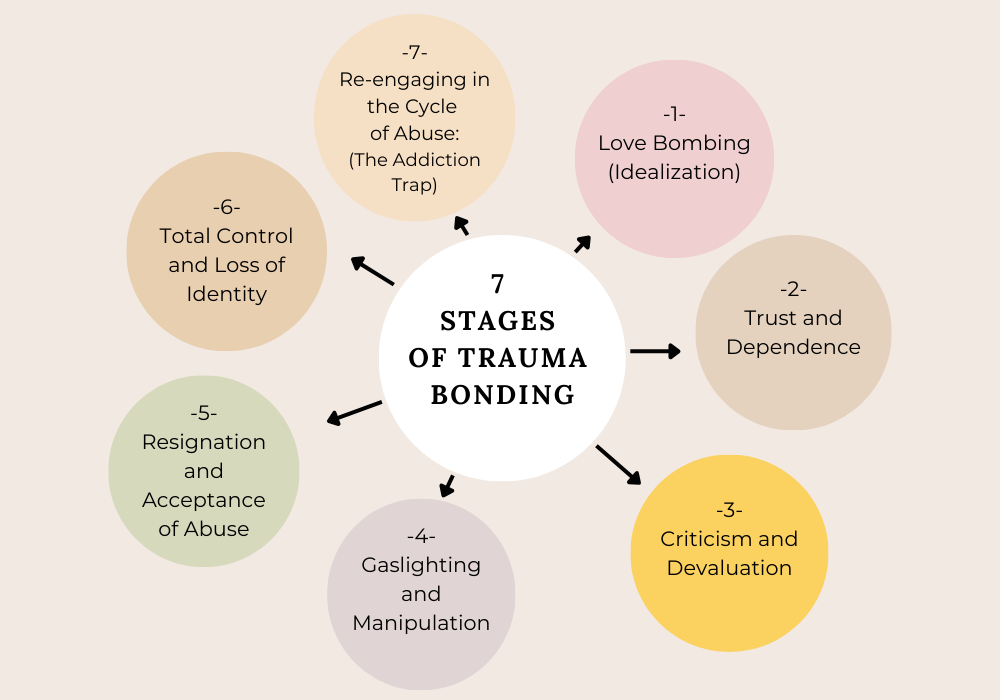
Quick Overview: The 7 Stages of Trauma Bonding
1-Love Bombing (Idealization)
The relationship starts intensely, with excessive affection, attention, and emotional closeness that creates fast attachment.
2-Trust and Dependence
You begin relying on the person emotionally, financially, or psychologically, while slowly losing independence.
3-Criticism and Devaluation
Subtle criticism, emotional withdrawal, or put-downs replace the early affection, creating confusion and self-doubt.
4-Gaslighting and Manipulation
Your reality is questioned, your feelings are minimized, and you’re made to feel responsible for the problems.
5-Resignation and Acceptance of Abuse
You stop resisting, normalize the behavior, and focus on keeping the peace rather than protecting yourself.
6-Total Control and Loss of Identity
The relationship dominates your thoughts, choices, and sense of self, leaving you disconnected from who you were.
7-Re-engaging in the Cycle (The Addiction Trap)
Moments of affection or apology pull you back in, restarting the cycle and reinforcing emotional dependency.
What Exactly Is Trauma Bonding?
Trauma bonding is a deep psychological and emotional attachment that forms between a victim and their abuser through repeated cycles of manipulation, fear, and intermittent kindness. This bond creates a strong dependency, making it difficult for the victim to leave—even when they recognize the harm it’s causing.
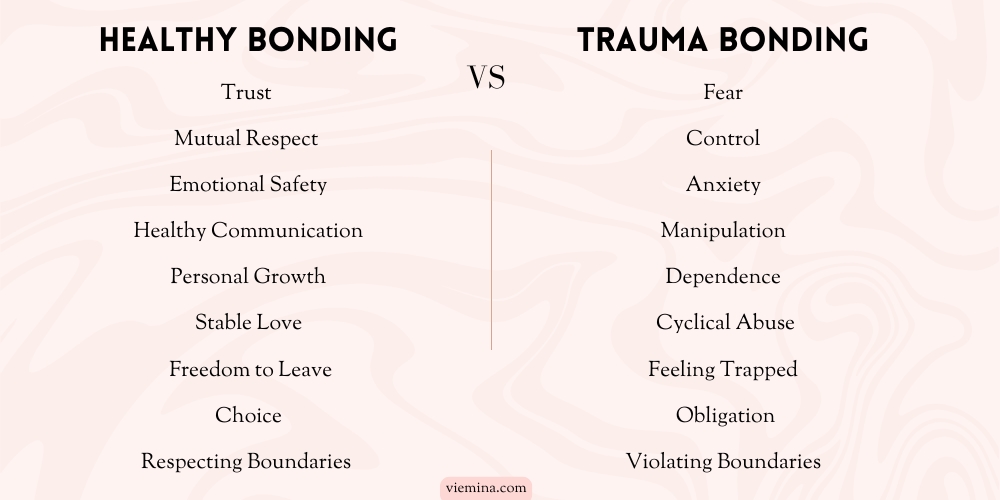
Unlike healthy relationships, which are built on trust, respect, and emotional security, trauma bonds thrive on control and unpredictability. The abuser alternates between affection and mistreatment, keeping the victim hopeful that things will eventually improve. Over time, this cycle rewires the brain, making the toxic relationship feel essential for survival.
Long-term Effects of Trauma Bonding:
The consequences of trauma bonding extend far beyond the immediate relationship:
- Chronic anxiety, depression, and PTSD.
- Difficulty trusting others or oneself.
- Distorted perception of what constitutes “normal” in relationships.
- Compromised sense of personal identity and self-worth.
- Physical health problems related to chronic stress.
- Increased vulnerability to future abusive relationships.
- Financial instability from exploitation or disrupted employment.
The 7 Stages of Trauma Bonding:
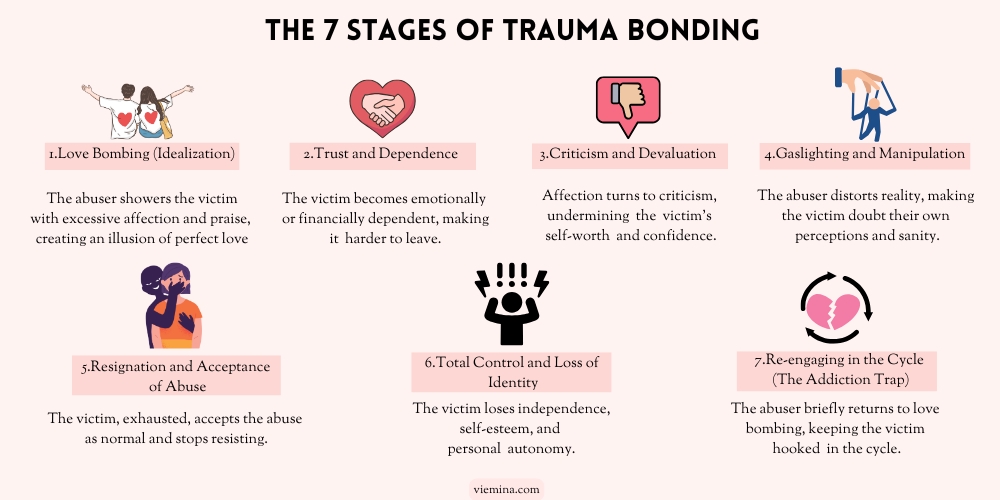
Understanding the progression of trauma bonding can help identify the pattern before it becomes entrenched. Each stage represents a deepening of the unhealthy attachment and increasing difficulty in breaking free.
So, the 7 stages of trauma bonding are as follows:
Stage 1: Love Bombing (Idealization):
The first stages of trauma bonding, love bombing, or idealization are when the abuser creates an illusion of a perfect relationship to gain the victim’s trust and emotional investment. This phase is often marked by intense affection, excessive compliments, grand gestures, and unwavering attention, making the victim feel deeply valued and cherished. The emotional high from this stage can be overwhelming, fostering a sense of euphoria and attachment.
However, this idealization is not genuine; it is a manipulative tactic designed to establish control. The abuser presents themselves as the perfect partner, making it difficult for the victim to recognize future red flags. Once the emotional bond is strong, the dynamic shifts, leading to the next phases of trauma bonding, where control and manipulation become more apparent.
Observable Signs and Tactics:
- Unceasing messages or calls, even at odd hours.
- Luxury gifts & grand gestures.
- Fast-moving commitment – Early talk of marriage, moving in, or being “soulmates.”
- “Perfect” alignment – Interests, values, and goals seem almost identical.
- Statements like“ no one has ever understood me like you do”.
- Excessive compliments and validation.
- Providing a sense of stability and security.
Example:
Abuser: Texting constantly, making plans immediately, positioning themselves as the “perfect” partner, mirroring the victim’s interests and values.
Victim: Feeling euphoric, believing they’ve found their perfect match, sharing personal information quickly, beginning to prioritize the relationship above other aspects of life.
Stage 2: Trust and Dependence:
Once the victim is emotionally invested, the abuser shifts to “reinforcing dependence”. They position themselves as the victim’s primary support system while “gradually isolating them” from friends, family, and other sources of stability.
During this stage, the abuser creates emotional, financial, and social reliance, ensuring the victim feels they “need” them. They may “rush commitment”, framing the relationship as something special or “meant to be” to secure control. At the same time, they continue “just enough positive reinforcement”—occasional affection or apologies—to keep the victim hopeful for better days.
Because this stage blurs the line between love and control, the victim may start doubting their own judgment and feeling anxious when apart from the abuser. Since this dependence builds gradually, it becomes harder to recognize.
Observable Signs and Tactics:
- Increasing isolation from friends and family.
- Growing emotional dependence on the abuser’s approval.
- Sharing of deeply personal information and vulnerabilities.
- Financial entanglements or practical dependencies.
- Gaslighting whispers, “You’d never survive without me”.
- Subtle testing of boundaries.
- Centering life decisions around the relationship.
- Feeling anxious when separated.
- Making the victim feel special but increasingly reliant on the abuser.
- Creating an “us vs. them” mentality.
Example:
- Abuser: Subtly criticizing the victim’s support system, positioning themselves as uniquely understanding, encouraging lifestyle changes that increase dependence, collecting emotional “ammunition” through confidences.
- Victim: Gradually withdrawing from other relationships, seeking the abuser’s input on decisions, feeling uncomfortable without the abuser’s presence, and defending the relationship to concerned friends.
Real-life example:
“They made me feel like only they understood me, “shared one survivor.” They started with small loans, then I stopped seeing my sisters. Now I can’t remember who I was before.”
Stage 3: Criticism and Devaluation:
As trauma bonding deepens, Stage Three marks a significant shift—what once felt like care and admiration turns into criticism and devaluation. The abuser might disguise their criticism as “helpful advice”, make passive-aggressive remarks, or dismiss concerns with phrases like “You’re overreacting.”
Over time, these behaviors chip away at the victim’s confidence, making them question their own judgment and feel like they can never get things right. Despite the negativity, the abuser continues offering just enough affection and reassurance to keep the victim emotionally attached, deepening the trauma bond without them even realizing it.
“The idealization phase’s high creates a filter that distorts present harm.” — Dr. Susan Forward, toxic relationships researcher
Observable Signs and Tactics:
- Increasing “constructive criticism” that feels disproportionate.
- Focus on “improving” the victim.
- Moving the goalposts for approval.
- Subtle put-downs disguised as jokes or help.
- Diminishing self-confidence in the victim.
- Walking on eggshells to avoid criticism and increased efforts to please the abuser.
- Backhanded compliments or subtle insults.
- Comparing the victim to others negatively.
- Shifting blame and making the victim feel inadequate.
Example:
- Abuser: Making disparaging comments about appearance or abilities, comparing the victim unfavorably to others, suggesting the victim is lucky to have the relationship (You’re lucky I put up with you), alternating criticism with praise.
- Victim: Accepting blame for relationship problems, working harder to please the abuser, beginning to doubt their perceptions, making excuses for the abuser’s behavior.
Stage 4: Gaslighting and Manipulation:
At this stage, the abuser intensifies manipulation through gaslighting, making the victim question their own reality. They may deny past actions, twist conversations, or shift blame, causing confusion and self-doubt. Statements like “That never happened” or “You’re imagining things” make the victim second-guess their own memories and perceptions.
As a result, victims often feel disoriented, forgetful, or even guilty, believing they are the problem. Over time, they become increasingly dependent on the abuser to define what’s real. This emotional manipulation strengthens the bond, making it even harder to recognize the abuse or break free.
Observable Signs and Tactics:
- Denying things they previously said or did, / Denying events, the victim clearly remembers.
- Twisting facts to make the victim feel crazy.
- Claiming promises or agreements never happened.
- Shifting blame for abusive incidents onto the victim.
- Using phrases like “You’re too sensitive” or “That never happened”.
- Retelling events with significant distortions.
- Triangulating with others to support their version of reality.
- Victims experience confusion, memory doubts, and reality questioning.
Example:
- Abuser: Claiming they never said hurtful things (that they did say), insisting the victim is“crazy” or “imagining things,” shifting goalposts, making the victim defend basic perceptions.
- Victim: Apologizing for reactions to abuse, questioning their own memory and perceptions, feeling mentally unstable, and keeping detailed records to verify reality.
Related: 18 Signs of Manipulation in a Relationship

Stage 5: Resignation and Acceptance of Abuse:
At this stage, the victim begins to accept the abuse as normal, often as a survival mechanism. Their mind rationalizes the situation, making it easier to endure rather than resist. This is sometimes referred to as the fawn response—a trauma reaction where the victim appeases the abuser to avoid conflict.
Instead of questioning the mistreatment, they adjust their behavior to prevent outbursts or further harm. They may walk on eggshells, suppress their own needs, and prioritize the abuser’s happiness, believing it’s the only way to keep the peace. Over time, this deepens the emotional bond, making it even harder to see a way out.
Observable Signs and Tactics:
- Conditioning the victim to comply through punishment and reward.
- Creating an unpredictable environment, keeping the victim on edge.
- Making the victim feel like the abuse is their fault.
- Changing appearance, opinions, or behaviors to please the abuser.
- Feeling empty or unsure of who you are without the relationship.
- Defending or rationalizing behaviors that contradict personal values.
- Accepting increasingly harmful treatment.
Example:
The victim avoids speaking up about concerns, fearing the abuser’s anger. They believe that if they just “try harder,” things will improve.
6-Total Control and Loss of Identity:
At this stage, the victim has lost their sense of self, trapped under the abuser’s relentless control. Through constant criticism and manipulation, the abuser erodes self-esteem and autonomy, making the victim feel worthless, incompetent, or even crazy.
As personal boundaries dissolve, the victim loses touch with their own desires and opinions, relying on the abuser for validation. This deep identity shift often leads to isolation, as they no longer feel connected to the people and world they once knew. The emotional toll is profound, leaving many feeling powerless, ashamed, and unable to move forward.
Observable Signs and Tactics:
- Destroying the victim’s self-worth to ensure compliance.
- Controlling basic aspects of life (finances, friendships, schedule, appearance).
- Punishments for perceived disobedience or independence.
- Abandoning previously important values or boundaries.
- Loss of interest in former hobbies and passions.
- Severe isolation from potential support systems.
- Difficulty making decisions without the abuser’s input.
- Monitoring behaviors (checking phone, demanding constant contact).
- Extreme jealousy or possessiveness framed as love.
- Financial dependence or exploitation.
- Fear-based compliance.
Example:
- Abuser: Using threats (explicit or implied), restricting access to resources, monitoring movements, punishing independence, maintaining strict rules with consequences.
- Victim: Seeking permission for basic decisions, hiding normal activities to avoid conflict, feeling terror at the thought of displeasing the abuser, seeing minor freedoms as significant gifts.
This stage is a trap. The psychological impact of trauma bonding makes victims feel like they’ll lose everything if they leave. Fear and intermittent reinforcement strengthen the bond—any small kindness feels magnified against the backdrop of control, creating a powerful sense of relief and gratitude that strengthens the attachment.
Related: 20 Warning Signs of a Controlling Relationship
7-Re-engaging in the Cycle of Abuse: The Addiction Trap:
This is the final stage in the 7 stages of trauma bonding. At this stage, the trauma bond repeats itself, pulling the victim deeper into the cycle. After intense abuse, the abuser shifts back to love bombing, offering apologies, affection, or small acts of kindness. This sudden shift creates a false sense of hope, making the victim feel relieved and reinforcing their emotional dependence.
Other times, the abuser withdraws completely, using silence and emotional neglect to force the victim into seeking their approval. The victim, desperate to restore peace, takes the blame and changes their behavior, believing they can fix things.
By now, the relationship feels like an addiction. The victim’s brain craves the rare moments of love, even at the cost of enduring abuse. Fear of abandonment becomes stronger than the fear of harm, and escaping feels impossible.
Observable Signs and Tactics:
- Dramatic reconciliations after abusive episodes.
- Promises of change without substantive action.
- Brief returns to love bombing behaviors.
- “Honeymoon periods” following escalations.
- Victims feel relief and hope during reconciliation.
- Apologizing and offering short-lived kindness after abusive episodes.
- Using hope and nostalgia to keep the victim invested.
Example:
- Abuser: Making grand apologies and promises, showing temporary behavioral changes, reinitiating romance or affection, presenting gifts, creating a sense that “this time is different”.
- Victim: Experiencing relief and hope, recommitting to the relationship, believing in change despite evidence, minimizing or forgetting the severity of abuse during reconciliation.
This stage traps the victim in the cycle, making each round of abuse harder to escape. The mix of pain and brief kindness strengthens the trauma bond, making the victim more dependent on those rare moments of relief. Like an addiction, the ups and downs create a powerful emotional grip that keeps them stuck.
Why Trauma Bonding Happens: Causes & Risk Factors:
Understanding what makes someone vulnerable to trauma bonding can help with both prevention and healing. While anyone can potentially form a trauma bond under the right circumstances, certain factors increase susceptibility.
Childhood Trauma:
Early experiences of abuse, neglect, or inconsistent caregiving create templates for relationships that can make trauma bonding feel familiar. Children who experienced unpredictable parenting (alternating between loving and harmful) may unconsciously seek similar patterns in adulthood.
Related: 16 Reasons Why is Adulting So Hard—How To Reclaim Your Life
Related: 23 Signs of Repressed Childhood Trauma in Adults
Previous Abusive Relationships:
Having experienced trauma bonding in the past increases vulnerability to future similar relationships, as the pattern becomes neurologically established.
Related: Understanding Complicated Relationships: 15 Signs & 8 Causes
Related: 12 Signs Of An Unhealthy Relationship
Low Self-Esteem:
Those who struggle with self-worth may believe they deserve mistreatment or cannot attract healthier relationships, making them more likely to tolerate abuse.
Related: Low Self Esteem: 10 Effective Ways to Improve Self-Worth
Unresolved Trauma:
Previous unaddressed trauma can create emotional vulnerabilities that abusers intuitively recognize and exploit.
People-Pleasing Tendencies:
Those who base their worth on others’ approval may be more susceptible to manipulation through intermittent reinforcement.
Related: How to Stop Being a People Pleaser: 10 Signs & Solutions

Rescuer Mentality:
Individuals who derive identity from helping or“fixing” others may be drawn to troubled partners and interpret abuse as something they can heal through love.
Perfectionism:
Perfectionists may internalize criticism and work harder to meet impossible standards set by an abuser.
Related: How To Overcome Perfectionism in 10 Tips
Romanticization of Intensity:
The Media often portrays jealousy, volatility, and obsession as signs of passionate love rather than warning signs of abuse
Normalization of Abuse:
Growing up in communities where abuse is common can normalize these dynamics, making them harder to identify as problematic.
Isolation and Economic Factors:
Practical barriers to independence, including financial insecurity and lack of social support, can increase vulnerability to trauma bonding by limiting perceived options.
Religious or Cultural Pressure:
Some traditions emphasize relationship permanence over well-being, creating external pressure to remain in harmful situations.
Study by Nicole Fonseca and Bruno Oliveira (2021): Trauma Bonding: concepts, causes and mechanisms in intimate relationships
How to Break Free from Trauma Bonding:
Getting out of a trauma bond is tough—really tough. It’s not as simple as just walking away, and if you’ve been in one, you know that all too well. The emotional attachment, the cycle of highs and lows, and the deep hope that things will improve can make leaving impossible. But the truth is, **you can break free**—and more importantly, you can heal. It won’t happen overnight, but step by step, you can reclaim your life.
1. Recognize What’s Really Happening:
The first and hardest step is accepting that you’re in a trauma bond. It’s not just love, and it’s not just a “complicated relationship“—it’s “a cycle of abuse and manipulation”.
Some signs include:
- Feeling deeply attached even though you’re being hurt.
- Making excuses for their behavior or blaming yourself.
- Constantly cycling between emotional highs and lows.
- Losing touch with friends and family because of them.
- Hoping things will change, despite all the red flags.
- Wanting to leave but feeling like you just *can’t*.
If any of this sounds familiar, “you are not alone”—and this isn’t your fault. Trauma bonds form because of psychological conditioning, not because you’re weak or broken.
2. Start Setting Boundaries (Even If It Feels Impossible at First):
One of the hardest things in a trauma bond is setting boundaries—especially when you’re used to putting the other person’s needs above your own. But boundaries are how you “take your power back”.
- Set limits on how often you communicate.
- They may test your boundaries, but stand firm.
- Tell a trusted friend or therapist what you’re doing.
- Writing down interactions can help you see patterns and resist gaslighting.
It might feel weird or even “wrong” to set boundaries at first, but keep reminding yourself: Protecting yourself is not selfish—it’s necessary.
Related: 7 Tips for Saying No Effectively

3. Rebuild Your Support System (Even If You Feel Disconnected Right Now):
Abusers thrive on isolation. The more alone you feel, the harder it is to leave. Reconnecting with people who genuinely care about you is a huge step forward.
- Reach out to old friends, even if it’s just a small message.
- Join a support group for survivors—it helps to know you’re not alone.
- Spend time with people who respect your boundaries and make you feel safe.
- Share your experience when you’re ready—it can be freeing to be heard.
4. Get Professional Help (Because Trauma Bonding Runs Deep):
Breaking free is more than just leaving—it’s “unlearning the patterns that kept you stuck”. A therapist, especially one who understands trauma bonding, can help you:
- Process what happened without self-blame.
- Recognize unhealthy relationship patterns so you don’t fall back into them.
- Learn to trust yourself and rebuild your self-worth.
- Develop coping strategies for the emotional rollercoaster of leaving.
If therapy isn’t an option right now, look for online resources, books, or survivor groups. “Education is powerful”, and understanding trauma bonding can help you break free from it.
5. Practice Self-Compassion:
Leaving an abusive relationship doesn’t magically erase the emotional scars. You might still miss them, might doubt yourself, might feel guilty. That’s all “normal”—but it doesn’t mean you should go back.
- Talk to yourself with kindness.
- Celebrate small victories—every step forward counts.
- Keep a journal—it can help you process emotions and see your progress.
- Find activities that bring you peace, whether it’s reading, exercising, or just taking deep breaths.
Healing takes time, so “be patient with yourself”. You deserve grace just as much as anyone else.
7. Cut Contact as Much as Possible:
This is “one of the hardest but most important steps”. Trauma bonds work like addictions—the more contact you have, the harder it is to move on.
- Block them on your phone and social media.
- Avoid checking up on them (even if you’re tempted).
- Delete old messages so you don’t keep rereading them.
- If you have to stay in touch (co-parenting, work, etc.), keep communication strictly business.
Related: Power of Silence After Break up: 11 Tips for How to Use It
Related: What Not To Do After A Breakup – Top 18 Mistakes To Avoid
Conclusion:
Healing starts with recognizing the “7 stages of trauma bonding” and understanding how they keep you stuck. Breaking free isn’t easy, but even small steps—like setting boundaries or reaching out for support—can help. Therapy can be a powerful tool, helping you trust yourself again and see what “healthy love” looks like.
Recovery isn’t a straight road. Some days will be harder than others, but with patience and the right support, you can move forward. (Talking to a counselor, leaning on friends, and being kind to yourself all make a difference).
Reclaiming your life is about growth, rediscovering who you are, and building relationships that feel safe and real. With time, trust in yourself gets stronger, and the cycle loses its hold. **You deserve real love, respect, and peace—and every step forward brings you closer.**
Frequently Asked Questions About Trauma Bonding
-
How do I know if I’m in a trauma bond or just in love?
This is the most crucial distinction. Love feels safe, respectful, and builds your self-esteem. A trauma bond feels addictive, unstable, and destroys your self-worth. Key differences: In love, conflicts are resolved with respect. In a trauma bond, conflicts involve manipulation, gaslighting, and a cycle of punishment and reward. Love encourages your independence; a trauma bond creates dependency and fear of abandonment.
-
What is the hardest stage of trauma bonding to overcome?
While each stage is challenging, many survivors and experts point to Stage 7: The Addiction Trap as the most difficult. This is where the cycle of abuse and intermittent reinforcement becomes neurologically ingrained. Breaking free requires fighting against your own brain’s chemically-driven cravings for the “high” of reconciliation after the “low” of abuse, which feels very similar to breaking a drug addiction.
-
Can a trauma bond become a healthy relationship?
Typically, no. Trauma bonds are rooted in a power imbalance and cycles of abuse, not mutual respect. The very foundation is unhealthy. While an abuser could choose to get extensive professional help and genuinely change, this is rare. For the victim, the healthiest and safest path is almost always to end the relationship and focus on their own healing, breaking the cycle entirely.
-
How long does it take to break a trauma bond?
There is no universal timeline, as healing is deeply personal. However, with active effort and support, many people start to feel a significant shift within 6 to 12 months. Factors that influence the timeline include the relationship’s length, the severity of the abuse, the quality of your support system, and whether you’re working with a trauma-informed therapist. Be patient with yourself; healing is not linear.
-
What is the first and most important step to breaking a trauma bond?
The very first step is awareness and naming the problem. You must recognize that you are not just in a “toxic” or “difficult” relationship, but are trapped in a psychological bond. Accepting that you are experiencing a trauma bond—a recognized psychological response—reduces self-blame and allows you to see the manipulative cycle for what it is, which is the essential foundation for all other healing steps.
-
Why is it so hard to leave a trauma bond?
It’s hard because you are essentially fighting a psychological addiction. Your brain has been wired by the abuse cycle to crave the “reward” of kindness after cruelty. This is combined with very real factors like fear (of being alone, of the abuser’s retaliation), eroded self-esteem (believing you deserve it or can’t do better), and practical barriers (financial dependence, isolation).